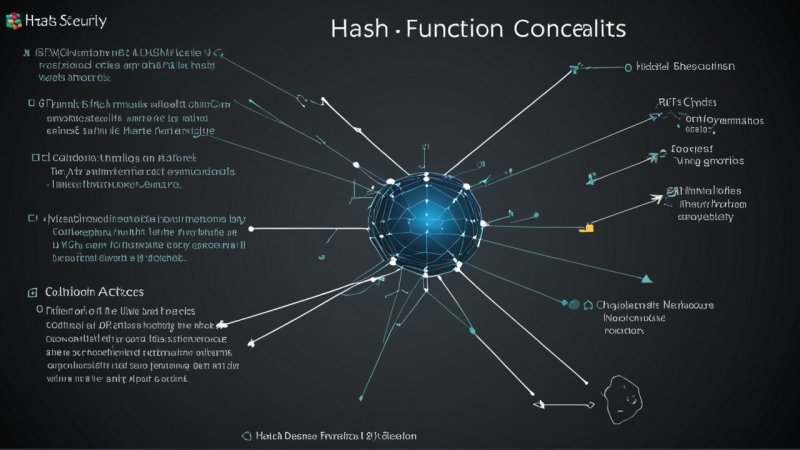
In the realm of cryptography, hash functions play a critical role in ensuring data integrity, security, and authentication. However, the effectiveness of these functions can be compromised by vulnerabilities, particularly through collision attacks. A collision attack occurs when two different inputs produce the same hash output, undermining the reliability of the hash function. This article explores the implications of hash function collision attacks, examining their mechanisms, real-world applications, and the potential consequences for data security.
Understanding Hash Functions
Hash functions are algorithms that take an input (or 'message') and return a fixed-size string of bytes, typically represented as a hexadecimal number. The output is known as the hash value or digest. A robust hash function possesses several key properties: it is deterministic (the same input always produces the same output), it is quick to compute, it is infeasible to reverse (i.e., deriving the input from the output is computationally impractical), and it is collision-resistant (it should be hard to find two different inputs that yield the same hash output).
Properties of Secure Hash Functions
To further understand the implications of collision attacks, it is essential to grasp the properties that make a hash function secure. The following are critical properties:
- Deterministic: The same message must always yield the same hash.
- Pre-image Resistance: It should be difficult to find any input that hashes to a specific output.
- Second Pre-image Resistance: Given an input and its hash, finding another input with the same hash should be infeasible.
- Collision Resistance: It should be difficult to find two different inputs that produce the same hash output.
What Are Collision Attacks?
Collision attacks exploit the weaknesses in hash functions to find two distinct inputs that produce the same output. This undermines the integrity of systems relying on the uniqueness of hash outputs for verification and authentication. Attackers can use collision attacks to create fraudulent documents or messages that appear legitimate due to sharing the same hash as a valid input.
Types of Collision Attacks
There are several types of collision attacks that can be enacted:
- Birthday Attack: This attack exploits the mathematics behind the birthday paradox, which states that in a group of people, the probability of two sharing a birthday is higher than intuitively expected. In the context of hashing, it means that the likelihood of finding two different inputs that hash to the same value increases dramatically with more inputs.
- Chosen Input Attack: Here, the attacker can select specific inputs and observe their hashes, enabling them to find collisions more easily.
- Randomized Attack: This involves random searching for collisions without specific input selection, often requiring vast computational resources.
Real-World Implications of Collision Attacks
The consequences of successful collision attacks can be dire, particularly in sensitive applications like digital signatures, certificate generation, and blockchain technology. A few notable implications include:
1. Digital Signatures
Digital signatures rely on hash functions to provide authenticity and integrity. If an attacker can produce a collision, they could create a fraudulent document that appears to have a valid signature, leading to serious legal and financial consequences.
2. Certificate Authorities
Certificate authorities (CAs) use hash functions to sign SSL certificates. If attackers can create a collision, they might issue a fraudulent certificate that could impersonate a trusted website, thereby compromising user data and security.
3. Blockchain Technology
In blockchain, hash functions secure transactions and blocks. Collision attacks could allow an attacker to create a fork in the blockchain, leading to double-spending or undermining the trustworthiness of the entire network.
Case Studies of Collision Attacks
Several high-profile incidents have highlighted the dangers of collision attacks:
1. MD5 and SHA-1 Vulnerabilities
MD5 and SHA-1 have been widely criticized for their susceptibility to collision attacks. Researchers demonstrated practical collision attacks against both, leading to their deprecation in favor of more secure alternatives like SHA-256 and SHA-3.
2. The Flame Malware
In 2012, the Flame malware exploited SHA-1 vulnerabilities to forge digital certificates, allowing attackers to perform man-in-the-middle attacks and intercept sensitive data.
Mitigating Collision Attacks
To protect against collision attacks, it is essential to adopt secure hashing algorithms. The use of stronger algorithms like SHA-256 or SHA-3 is recommended. Additionally, implementing other security measures such as digital signatures, multi-factor authentication, and regular security audits can help mitigate risks associated with collision attacks.
Conclusion
Hash function collision attacks pose a significant threat to data integrity and security across various applications. Understanding their mechanisms, implications, and real-world consequences is crucial for developers, security professionals, and organizations. By adopting stronger hashing algorithms and implementing robust security practices, the risks associated with these attacks can be minimized, ensuring the reliability of systems that depend on hash functions.