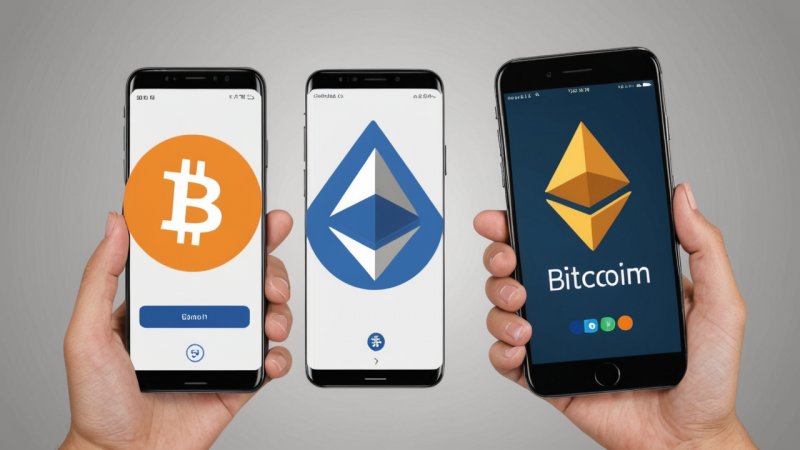
The rise of blockchain technology has revolutionized various sectors, with mobile payments being one of the most significant areas of impact. As consumers demand faster, more secure, and convenient payment methods, blockchain-based mobile payment solutions have emerged as viable alternatives to traditional banking systems. This article compares two of the most prominent blockchain platforms—Bitcoin and Ethereum—highlighting their respective mobile payment capabilities, advantages, and limitations.
Overview of Bitcoin and Ethereum
Bitcoin, created in 2009 by an anonymous individual or group known as Satoshi Nakamoto, is the first cryptocurrency and primarily serves as a digital currency. It enables peer-to-peer transactions without the need for intermediaries, making it a decentralized payment method.
Ethereum, launched in 2015 by Vitalik Buterin and others, is more than just a cryptocurrency; it is a decentralized platform that allows developers to build and deploy smart contracts and decentralized applications (dApps). Ether (ETH) is the native cryptocurrency of the Ethereum network.
Mobile Payment Capabilities
Bitcoin Mobile Payments
Bitcoin's mobile payment capabilities are primarily facilitated through various wallets that support the Bitcoin protocol. Users can send and receive Bitcoin through their mobile devices, leveraging QR codes for quick transactions. Notable mobile wallets include:
- Coinbase Wallet: A user-friendly mobile wallet that allows users to buy, sell, and manage their Bitcoin and other cryptocurrencies.
- Blockchain.com Wallet: One of the oldest wallets in the space, offering robust security features and a seamless mobile experience.
- Mycelium: A wallet focused on privacy and security, allowing users to manage their Bitcoin efficiently.
Ethereum Mobile Payments
Ethereum also supports mobile payments through wallets that enable users to manage their Ether and interact with decentralized applications. Popular Ethereum wallets include:
- MetaMask: A widely used wallet that allows users to interact with dApps directly from their mobile devices.
- Trust Wallet: A multi-cryptocurrency wallet that supports Ethereum and various ERC-20 tokens, offering an intuitive mobile interface.
- Argent: A mobile wallet designed for Ethereum, focusing on security and user experience, enabling users to easily manage their assets.
Pros and Cons of Bitcoin and Ethereum for Mobile Payments
Bitcoin Pros
- Established Network: As the first cryptocurrency, Bitcoin has a robust and well-established network with widespread acceptance.
- Security: Bitcoin's decentralized nature and proof-of-work consensus mechanism provide significant security against attacks.
- Low Transaction Fees: Transaction fees for Bitcoin payments can be lower than traditional banking fees, especially for international transfers.
Bitcoin Cons
- Scalability Issues: Bitcoin's transaction throughput is limited, resulting in delays during peak times.
- Complexity: New users may find Bitcoin's wallet management and transaction process challenging.
- Lack of Smart Contracts: Bitcoin does not support complex agreements or smart contracts, limiting its functionality.
Ethereum Pros
- Smart Contract Functionality: Ethereum's ability to execute smart contracts allows for more sophisticated transactions and applications.
- Flexibility: Ethereum supports a wide range of tokens and dApps, catering to various payment needs.
- Community and Development: A strong developer community continuously enhances the Ethereum network, leading to innovative solutions.
Ethereum Cons
- Higher Transaction Fees: Ethereum's gas fees can be significantly higher than Bitcoin's, especially during network congestion.
- Scalability Challenges: Like Bitcoin, Ethereum also faces scalability issues, though Layer 2 solutions are being developed to address these.
- Complexity of Use: The use of smart contracts and dApps can complicate the user experience for those unfamiliar with the technology.
Real-World Applications and Case Studies
Bitcoin in Mobile Payments
Several companies have integrated Bitcoin into their mobile payment systems, enhancing user experience and providing alternatives to traditional options. For instance, major retailers like Overstock and Newegg accept Bitcoin payments through mobile wallets, enabling users to make seamless purchases.
Ethereum in Mobile Payments
Ethereum's capabilities extend beyond simple transactions. For example, the decentralized finance (DeFi) space has leveraged Ethereum's smart contracts to create innovative payment solutions. Applications like Uniswap allow users to swap tokens directly from their wallets, providing an efficient payment method for various cryptocurrencies.
Conclusion
In summary, both Bitcoin and Ethereum offer unique benefits and limitations for mobile payments. Bitcoin is renowned for its security and established presence, making it a reliable choice for straightforward transactions. In contrast, Ethereum excels in flexibility and functionality, enabling innovative applications through smart contracts. Ultimately, the choice between Bitcoin and Ethereum for mobile payments depends on specific needs and use cases. Users seeking simplicity and security may prefer Bitcoin, while those looking for advanced features and dApp integration might find Ethereum more suitable.