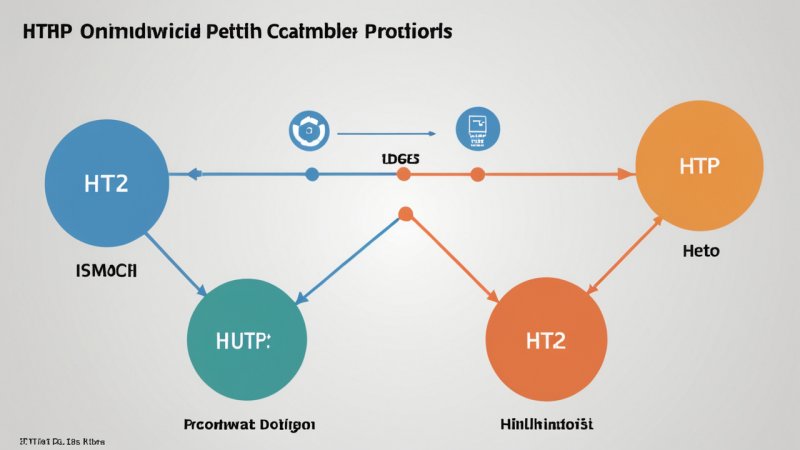
In the evolving landscape of web communication, the introduction of new protocols often revolutionizes the way data is transmitted across the internet. HTTP/2 and HTTP/3 are two such protocols that have gained significant attention for their potential to enhance web performance. While both aim to improve upon the limitations of their predecessor, HTTP/1.1, they do so in distinct ways. This article delves into a comprehensive comparison of HTTP/2 and HTTP/3, exploring their architecture, performance, use cases, and implications for web developers and users alike.
Overview of HTTP/2
HTTP/2, standardized in 2015, introduced several enhancements over HTTP/1.1. The most notable features include multiplexing, header compression, and server push. These improvements aim to reduce latency and increase the speed of web page loading.
Key Features of HTTP/2
- Multiplexing: Allows multiple requests and responses to be sent simultaneously over a single connection, reducing the need for multiple TCP connections.
- Header Compression: Uses the HPACK compression format to minimize the size of HTTP headers, reducing overhead.
- Server Push: Enables servers to send resources to the client proactively, anticipating future requests.
Overview of HTTP/3
HTTP/3 is the latest evolution of the HTTP protocol, built on QUIC (Quick UDP Internet Connections), which was originally developed by Google. Launched in 2020, HTTP/3 aims to address some of the inherent limitations of TCP, the underlying transport protocol used by HTTP/2.
Key Features of HTTP/3
- QUIC Transport: Replaces TCP with UDP, allowing for faster connection establishment and reduced latency.
- Built-in Encryption: HTTP/3 integrates TLS 1.3, ensuring that all traffic is encrypted by default.
- Improved Multiplexing: Tackles head-of-line blocking issues present in TCP, allowing for independent stream processing.
Performance Comparison
When comparing the performance of HTTP/2 and HTTP/3, several factors come into play, including connection establishment time, latency, and resource loading speed.
Connection Establishment
HTTP/2 relies on TCP, which requires a three-way handshake for connection establishment. In contrast, HTTP/3 uses QUIC, which significantly reduces this time to a single round trip, making it faster in scenarios with high latency.
Latency and Resource Loading
HTTP/2 can suffer from head-of-line blocking, where a single blocked stream can delay all subsequent streams. In contrast, HTTP/3, being built on QUIC, enables multiple streams to operate independently, effectively minimizing the impact of this issue and allowing faster loading of resources.
Use Cases
Both protocols have their unique advantages, making them suitable for different scenarios.
When to Use HTTP/2
HTTP/2 is an excellent choice for established web applications and sites that may not require the latest technology. It is widely supported by browsers and servers, making it a stable choice for most use cases.
When to Use HTTP/3
HTTP/3 is ideal for applications requiring low-latency connections, such as real-time communications, video streaming, and gaming. Its built-in encryption and improved performance make it a strong candidate for modern web applications aiming for optimal user experiences.
Compatibility and Adoption
Adoption of both protocols varies, with HTTP/2 being widely implemented across most web servers and browsers. HTTP/3, while gaining traction, is still in the early stages of adoption.
Browser Support
Most major browsers, including Chrome, Firefox, and Safari, support both HTTP/2 and HTTP/3. However, the extent of support for HTTP/3 may depend on the specific browser version and user settings.
Server Implementation
Web servers like Nginx and Apache have implemented support for HTTP/2, and many are starting to roll out HTTP/3 as well. However, server administrators may need to configure additional settings to utilize HTTP/3 fully.
Security Considerations
Both protocols emphasize security, but they achieve this in different ways.
HTTP/2 Security
HTTP/2 typically runs over TLS, providing a secure connection. However, it inherits some vulnerabilities associated with TCP.
HTTP/3 Security
HTTP/3’s design incorporates TLS 1.3 from the ground up, which means it is more secure against certain types of attacks, such as those targeting the negotiation process of older TLS versions.
Conclusion
In summary, while both HTTP/2 and HTTP/3 aim to enhance the performance and security of web communication, they do so through different architectures and methodologies. HTTP/2 offers a robust solution for existing web applications, while HTTP/3 presents a forward-looking approach that addresses many of the inherent limitations of its predecessor. As the web continues to evolve, the choice between HTTP/2 and HTTP/3 will depend on specific use cases, performance requirements, and the desired level of security. For web developers and businesses, staying informed about these protocols will be crucial in optimizing performance and ensuring a seamless user experience.