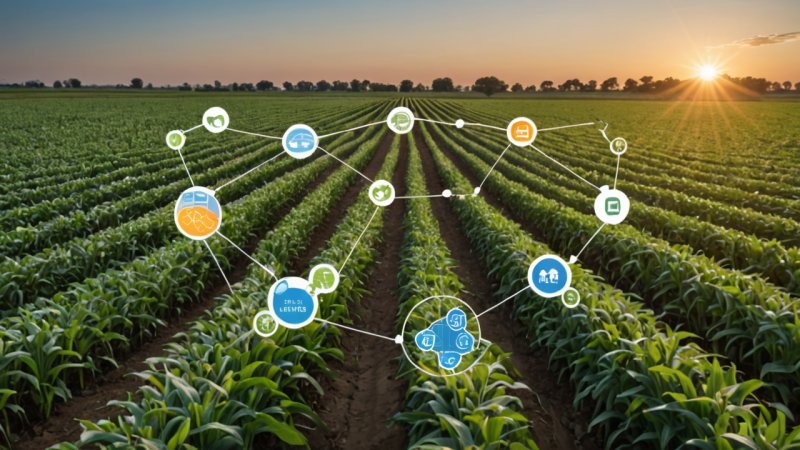
Blockchain technology is revolutionizing various industries, with agriculture being one of the most promising sectors for its application. This innovative decentralized ledger system enhances transparency, traceability, and efficiency in agricultural supply chains. As global demand for food continues to rise, implementing blockchain can significantly improve operational processes and build trust among stakeholders.
One of the fundamental advantages of blockchain in agriculture is its ability to ensure data integrity. Each transaction recorded on a blockchain is immutable, meaning that once data is entered, it cannot be altered without consensus from the network. This characteristic is crucial for maintaining accurate records of agricultural products from farm to table. By tracking every step of the supply chain, blockchain allows stakeholders to verify the origin and quality of products, providing consumers with confidence in their food sources.
Moreover, blockchain enhances traceability, which is vital for food safety. In the event of a foodborne illness outbreak, traceability enables rapid identification of contaminated products, allowing for swift action to mitigate harm. For example, if a batch of tomatoes is found to be contaminated, blockchain can help trace its path through the supply chain, identifying the farm, processing plants, and retailers involved. This level of transparency not only protects consumers but also helps companies mitigate financial losses by quickly isolating and addressing issues.
In addition to improving transparency and traceability, blockchain can streamline administrative processes within agricultural supply chains. Traditionally, the industry relies on paper-based records, which are prone to errors and fraud. By digitizing these records on a blockchain, stakeholders can automate processes such as payments and contracts through smart contracts. For instance, a smart contract can automatically release payment to a farmer once a shipment is verified as delivered, reducing delays and enhancing cash flow.
Several case studies illustrate the successful implementation of blockchain in agriculture. For instance, IBM's Food Trust initiative collaborates with major retailers and farmers to create a transparent food supply chain using blockchain technology. This initiative has successfully traced products like lettuce and mangoes, significantly reducing the time to trace produce from days to seconds. Similarly, projects like AgriDigital are empowering farmers to manage their grain supply chains more efficiently by enabling them to receive payments instantly upon delivery, thus enhancing their financial security.
In conclusion, the integration of blockchain technology into agricultural supply chains offers numerous benefits, including improved data integrity, enhanced traceability, and streamlined operations. As the agricultural sector continues to face challenges related to food safety and efficiency, blockchain stands out as a transformative solution that can foster greater trust among consumers and stakeholders alike. The ongoing advancements in this technology promise a more resilient and transparent agricultural ecosystem.