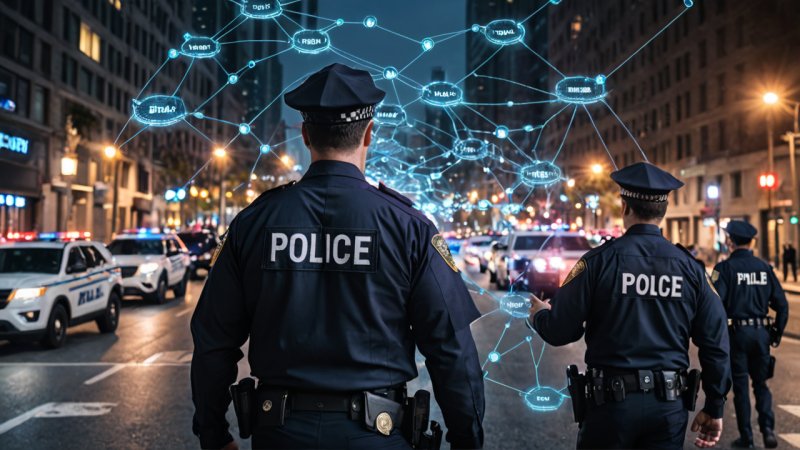
Blockchain technology has emerged as a revolutionary force in various sectors, and its potential to enhance public safety is particularly noteworthy. By providing transparency, security, and decentralization, blockchain can address numerous challenges faced by law enforcement and public safety agencies. Here are five significant ways blockchain is making a difference in the realm of public safety.
1. Improved Data Integrity
One of the primary advantages of using blockchain in public safety is its ability to ensure data integrity. The immutable nature of blockchain means that once data is recorded, it cannot be altered or deleted. This is crucial for law enforcement agencies that rely on accurate and reliable data for investigations.
- Records such as incident reports, evidence logs, and witness statements can be securely stored on the blockchain.
- Any attempts to tamper with or falsify this data can be easily detected, thereby enhancing accountability.
2. Enhanced Transparency in Operations
Transparency is vital for building trust between the community and law enforcement agencies. Blockchain can facilitate greater transparency in various operations, from budgeting to resource allocation.
- Blockchain technology allows the public to access real-time information about police activities, funding, and resource distribution.
- This transparency can reduce corruption and ensure that public funds are used effectively for community safety initiatives.
3. Streamlined Evidence Management
Managing evidence is a critical aspect of law enforcement, and blockchain can streamline this process significantly. Traditional methods of storing evidence can lead to issues of loss, tampering, or mismanagement.
- Blockchain can create a secure and tamper-proof ledger for all pieces of evidence collected during investigations.
- This ensures that the chain of custody is maintained and that evidence remains unaltered, which is vital for successful prosecutions.
4. Decentralized Emergency Response Systems
Blockchain can also play a pivotal role in enhancing emergency response systems. By decentralizing the management of emergency services, response times can be improved, and coordination between different agencies can be enhanced.
- Smart contracts on a blockchain can automate the dispatch of services based on real-time data, ensuring that the nearest available resources are deployed swiftly.
- This can lead to faster response times in critical situations, ultimately saving lives and protecting property.
5. Secure Sharing of Information
Another essential aspect of public safety is the sharing of information between different agencies and organizations. Blockchain can facilitate secure information sharing while maintaining privacy and security.
- Law enforcement agencies can share data about criminal activity, missing persons, or public threats without the risk of data breaches.
- This secure sharing can lead to quicker resolutions and a more coordinated approach to public safety issues.
In conclusion, blockchain technology offers a range of innovative solutions that can significantly enhance public safety. From ensuring data integrity to streamlining evidence management and improving emergency responses, the potential applications are vast and varied. As more agencies explore the integration of blockchain into their operations, the future of public safety looks promising, with the possibility of building stronger, safer communities.