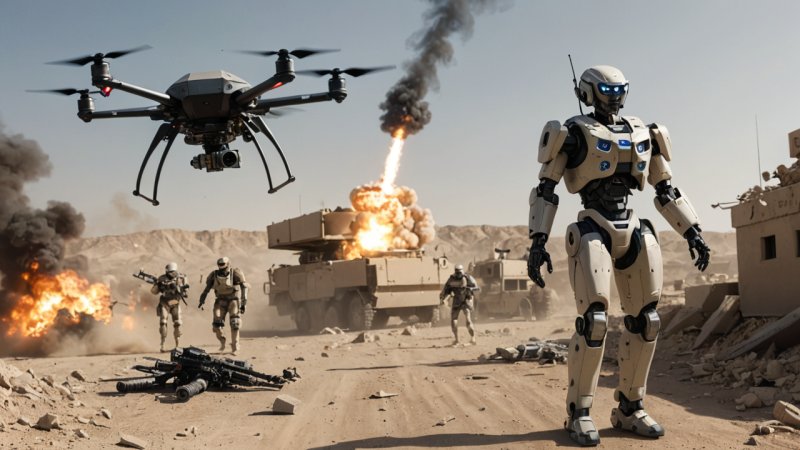
Understanding AI and Robotics in Warfare
The integration of artificial intelligence (AI) and robotics in warfare has revolutionized military operations, but it has also raised significant ethical concerns. As these technologies advance, it is crucial to evaluate their implications on humanity, morality, and the rules of engagement. This article outlines the top five ethical considerations that must be addressed when deploying AI and robotics in military contexts.
1. Accountability in Autonomous Systems
One of the primary ethical concerns is determining accountability for actions taken by autonomous weapons. If an AI system makes a decision that leads to civilian casualties, who is responsible? Key Point: Establish clear guidelines for accountability, ensuring that human operators retain ultimate control over autonomous systems.
2. The Principle of Distinction
International humanitarian law mandates that combatants distinguish between military targets and civilians. Autonomous weapons must adhere to this principle, raising questions about their ability to make nuanced decisions in complex environments. Key Point: Develop robust algorithms that can accurately identify threats while minimizing the risk to non-combatants.
3. The Risk of Escalation
The deployment of AI and robotics in warfare could lead to unintended escalations. AI systems may misinterpret data, leading to erroneous conclusions and aggressive responses. Key Point: Implement fail-safes and human oversight to prevent premature escalation in conflict situations.
4. Psychological Impact on Soldiers
The use of AI and robotics could alter the psychological dynamics of warfare. Soldiers may become desensitized to violence when operating machines instead of engaging in direct combat. Key Point: Address the mental health implications of using AI in combat and provide adequate support for service members.
5. Global Inequality in Military Capabilities
The disparity in access to advanced AI technology can exacerbate global inequalities. Wealthier nations may dominate the battlefield, leaving less developed countries vulnerable. Key Point: Foster international dialogue to establish equitable standards for the use of AI in warfare, promoting global stability.
Conclusion
As AI and robotics continue to shape the future of warfare, it is essential to address the ethical considerations that accompany their use. Accountability, adherence to international law, risk management, psychological impacts, and global equity are critical areas that demand careful thought and regulation. By proactively engaging with these issues, policymakers can help ensure that technological advancements do not compromise our moral responsibilities.