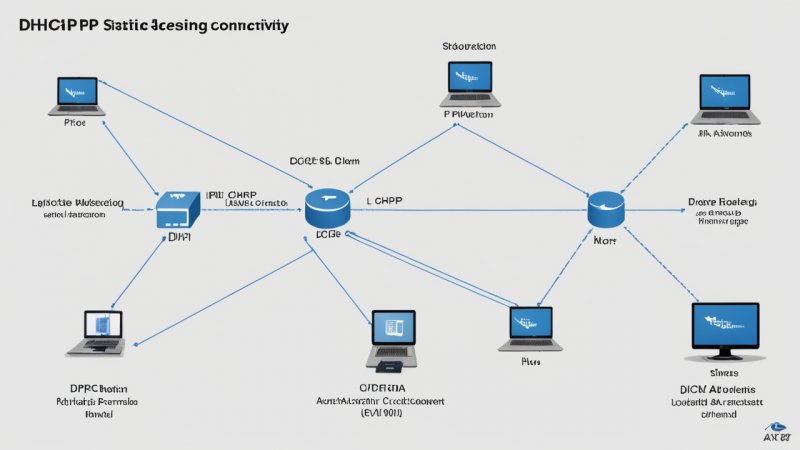
When it comes to assigning IP addresses within a network, organizations often face a crucial decision: should they utilize Dynamic Host Configuration Protocol (DHCP) for dynamic IP addressing or opt for static IP addressing? Each method has its own advantages and drawbacks, making it essential to understand their differences and applications. In this article, we will compare DHCP and static IP addressing in detail, exploring their operational mechanics, advantages and disadvantages, and use cases to help you make an informed decision for your networking needs.
Understanding DHCP
Dynamic Host Configuration Protocol (DHCP) is a network management protocol used for automating the process of configuring devices on IP networks. DHCP enables devices to receive IP addresses dynamically, eliminating the need for manual configuration. When a device connects to the network, the DHCP server assigns an IP address from a predefined pool of addresses.
How DHCP Works
The DHCP process generally involves four steps known as DORA:
- Discover: The client device broadcasts a DHCP Discover message to find available DHCP servers.
- Offer: The DHCP server responds with a DHCP Offer message, proposing an IP address and other network configuration details.
- Request: The client responds with a DHCP Request message, indicating acceptance of the offered IP address.
- Acknowledge: The DHCP server sends a DHCP Acknowledge message, confirming the lease of the IP address to the client.
Pros of Using DHCP
- Ease of Management: Automates IP address assignment, reducing the administrative burden.
- Reduced Configuration Errors: Minimizes the risk of IP address conflicts and misconfigurations.
- Scalability: Easily accommodates network growth by allowing for the addition of new devices without manual intervention.
Cons of Using DHCP
- Temporary IP Addresses: IP addresses are not permanent, which can complicate certain applications.
- Dependency on DHCP Server: Network access relies on the availability of the DHCP server; if it goes down, devices may not connect.
- Security Concerns: Unauthorized DHCP servers can lead to security vulnerabilities.
Understanding Static IP Addressing
Static IP addressing, in contrast to DHCP, involves manually assigning a fixed IP address to each device on the network. This means that the IP address remains constant, allowing for more predictable network configurations.
How Static IP Addressing Works
With static IP addressing, the network administrator must configure each device with an IP address that is not already in use. This configuration includes specifying the subnet mask, default gateway, and DNS servers as needed.
Pros of Using Static IP Addressing
- Stability: Devices retain their IP addresses, which is essential for services like web hosting or online gaming.
- Ease of Remote Access: Simplifies remote access configurations since the IP does not change.
- Enhanced Security: Reduces the risk of unauthorized access since IP addresses are predictable and can be closely monitored.
Cons of Using Static IP Addressing
- Manual Configuration: Requires more time and effort to configure each device, particularly in larger networks.
- Higher Risk of Conflicts: If two devices are assigned the same static IP address, it can lead to network conflicts.
- Less Flexibility: Difficult to accommodate changes in network size or structure without reconfiguration.
Comparison of DHCP and Static IP Addressing
Flexibility and Scalability
DHCP is inherently more flexible and scalable than static IP addressing. In environments where devices frequently join or leave the network, such as in a corporate setting or a public Wi-Fi hotspot, DHCP allows for quick and seamless integration without the need for manual configuration.
Static IP addressing, however, is less flexible. It is most suitable for networks with a small number of devices or for devices that require a consistent address, such as servers or printers.
Management and Maintenance
DHCP simplifies management and maintenance tasks, making it ideal for larger networks. Network administrators can manage IP addresses, monitor usage, and troubleshoot issues more efficiently.
In contrast, static IP addressing requires dedicated management efforts, especially when devices need to be added or removed. Keeping track of assigned addresses can become cumbersome as the network grows.
Security Considerations
Static IP addresses can be more secure in certain contexts, as they allow for tighter control over network access and monitoring. However, if not managed properly, they can also lead to security vulnerabilities due to address conflicts.
DHCP can introduce security risks, particularly if an unauthorized DHCP server is present on the network. However, modern DHCP implementations often include security features, such as DHCP snooping, to mitigate these risks.
Use Cases
Choosing between DHCP and static IP addressing often depends on the specific use case:
- DHCP: Best suited for dynamic environments where devices frequently change, such as corporate offices, schools, and cafes.
- Static IP Addressing: Ideal for servers, network printers, and devices that require consistent access, or in small home networks.
Conclusion
Both DHCP and static IP addressing have their respective strengths and weaknesses. DHCP is more flexible and easier to manage in dynamic environments, while static IP addressing offers stability and predictability, making it suitable for specific use cases. Ultimately, the choice between the two should be based on the specific requirements of your network, including size, complexity, and security considerations. For most organizations, a hybrid approach leveraging both methods may provide the best balance of flexibility and control.