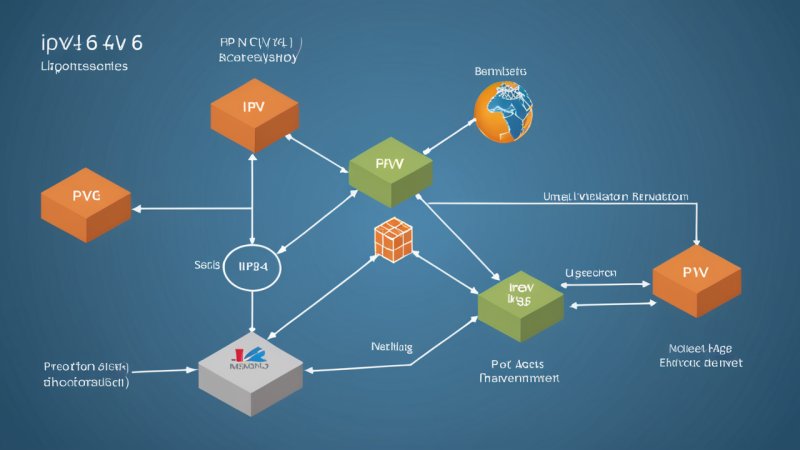
The transition from IPv4 to IPv6 is a monumental challenge for network administrators and organizations worldwide. As the number of devices connected to the internet continues to grow, the limitations of IPv4 addressing have become increasingly evident. NAT64 (Network Address Translation from IPv6 to IPv4) serves as a crucial mechanism in this transition, allowing IPv6-only clients to communicate with IPv4 servers. This article delves into the details of NAT64, its implementation, benefits, and role in facilitating a smoother transition to the IPv6 ecosystem.
Understanding NAT64
NAT64 is a network protocol that enables IPv6-enabled clients to access IPv4 resources. By translating IPv6 addresses into IPv4 addresses and vice versa, NAT64 acts as a bridge between the two protocols, facilitating communication in a mixed environment. This functionality is particularly important as many legacy systems and services still operate on IPv4 and will take time to migrate to IPv6.
How NAT64 Works
NAT64 operates by using a combination of DNS64 and translation mechanisms. Here’s a breakdown of how it works:
- DNS64: This is an extension of DNS that allows IPv6 clients to resolve domain names that are only available in IPv4. When an IPv6 client queries a domain, DNS64 synthesizes an AAAA record from the existing A record, providing an IPv6 address that points to the NAT64 gateway.
- NAT64 Translation: Once the IPv6 client sends a packet to the synthesized IPv6 address, the NAT64 device translates the IPv6 packet into an IPv4 packet. This involves modifying the headers to match the requirements of IPv4 and vice versa for responses.
Types of NAT64
NAT64 can be categorized into two main types based on the translation mechanism:
- Stateful NAT64: This type maintains a mapping table for each session, allowing return traffic to be routed back correctly. It is more efficient for managing connections but requires more resources.
- Stateless NAT64: This approach does not maintain session states, making it simpler and more scalable. However, it can lead to issues with certain types of traffic, such as those requiring consistent connection states.
Applications of NAT64
NAT64 is integral to various applications, especially in environments transitioning to IPv6. Here are some notable uses:
1. Legacy System Support
Many organizations have legacy systems that depend on IPv4. NAT64 allows these systems to interact with new IPv6 applications without requiring immediate upgrades or replacements. This is crucial for businesses that rely on older technology but need to integrate with modern services.
2. IoT Device Integration
The Internet of Things (IoT) heavily relies on IPv6 due to its vast address space. NAT64 enables IPv6-only IoT devices to communicate with IPv4-based servers, ensuring seamless data exchange across different networks and devices.
3. Cloud Service Access
As more services migrate to the cloud, ensuring compatibility between IPv4 and IPv6 becomes essential. NAT64 facilitates this transition, allowing organizations to access cloud resources without needing to overhaul their existing infrastructures.
Implementing NAT64
Implementing NAT64 involves several steps, including network configuration, DNS setup, and testing. Below is a guide to implementing NAT64 in a typical network environment:
Step 1: Set Up DNS64
Configure a DNS server that supports DNS64. This server will handle requests from IPv6 clients and synthesize the necessary AAAA records from existing A records.
example.com. IN A 192.0.2.1
Step 2: Configure the NAT64 Gateway
Set up a NAT64 gateway, which can be a dedicated device or a software solution on a server. The NAT64 gateway should be configured with appropriate rules to handle traffic from IPv6 to IPv4 and vice versa.
Step 3: Test Connectivity
After configuration, it’s essential to conduct thorough testing. Use various tools to ensure that IPv6 clients can access IPv4 resources and that the NAT64 gateway is functioning correctly.
Challenges and Limitations of NAT64
While NAT64 provides a viable solution for transitioning to IPv6, it also comes with challenges:
1. Performance Overhead
The translation process can introduce latency and performance overhead, particularly in stateful NAT64 implementations that require maintaining session states.
2. Complexity in Management
Managing a dual-stack environment with NAT64 can increase network complexity. Network administrators must ensure proper configurations and monitor performance to avoid issues.
3. Application Compatibility
Some applications may not function correctly in a NAT64 environment, particularly those relying on certain protocols that do not translate well between IPv4 and IPv6.
Case Studies
Several organizations have successfully implemented NAT64 in their networks. Here are a couple of case studies highlighting its effectiveness:
Case Study 1: University Network
A large university faced challenges with its legacy systems and the increasing demand for IPv6 support. By implementing NAT64, the university allowed IPv6-enabled devices to connect to legacy IPv4 services without extensive upgrades. This transition not only improved network accessibility but also facilitated research and development initiatives that relied on modern IPv6 capabilities.
Case Study 2: IoT Company
An IoT company specializing in smart home devices found that many of their clients were transitioning to IPv6. To maintain compatibility with existing IPv4 cloud services, they deployed NAT64, enabling their devices to communicate seamlessly with the cloud. This implementation resulted in improved customer satisfaction and expanded their market reach, as they could now support a broader range of devices.
Future of NAT64 and IPv6 Transition
The future of NAT64 remains pivotal as organizations continue to shift towards IPv6. With the growing number of devices and the Internet of Things expanding rapidly, the need for effective NAT64 solutions will only increase. Moreover, as more applications and services become IPv6-native, the reliance on NAT64 may decrease, but its role as a transitional tool will remain significant in bridging the gap between IPv4 and IPv6.
Conclusion
NAT64 is a vital technology in the journey toward full IPv6 adoption. By allowing IPv6 clients to communicate with IPv4 resources, NAT64 helps ease the transition and supports legacy systems while fostering innovation in new technologies. Despite its challenges, the benefits of NAT64 are clear, making it an essential component of modern network strategies as we move towards a more interconnected future.