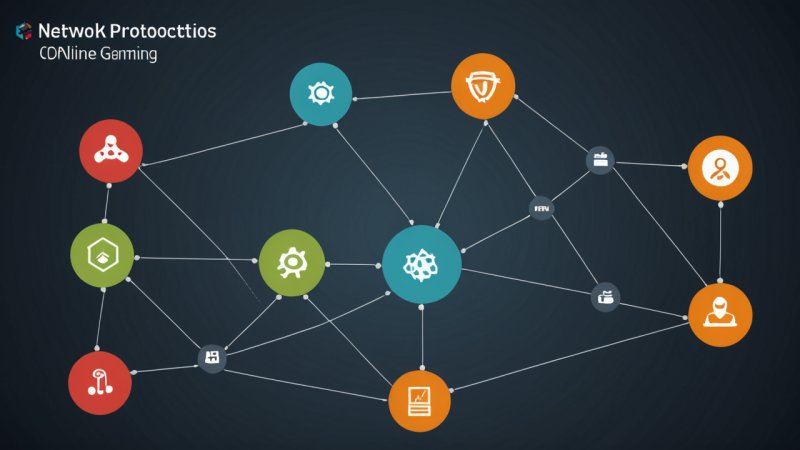
Network protocols play a crucial role in the seamless operation of online gaming, ensuring that data is transmitted efficiently and securely across the internet. They govern how data packets are sent, received, and interpreted, which is vital for maintaining the integrity and performance of gaming experiences. In this article, we will explore the various types of network protocols, their significance in online gaming, and how they contribute to a better user experience.
1. TCP/IP Protocol Suite
The Transmission Control Protocol (TCP) and Internet Protocol (IP) are the cornerstones of internet communication. TCP ensures reliable communication by establishing a connection between the sender and receiver, managing data flow, and ensuring that packets are delivered in order. IP, on the other hand, is responsible for addressing and routing packets to their destination. In online gaming, the TCP/IP protocol suite ensures that players can communicate effectively, whether they are sending messages, game data, or voice chat.
2. User Datagram Protocol (UDP)
Unlike TCP, the User Datagram Protocol (UDP) is used in scenarios where speed is prioritized over reliability. In online gaming, this means that while some data loss may occur, the game can continue running smoothly without the delay caused by TCP's error-checking mechanisms. UDP is favored for real-time applications like first-person shooters or racing games, where a split-second delay can impact gameplay significantly.
3. WebSocket Protocol
The WebSocket protocol allows for full-duplex communication channels over a single TCP connection, making it indispensable for modern online gaming. By enabling real-time interaction between the client and server, WebSockets provide a more engaging experience for players. This protocol is particularly useful for games that require constant updates, such as multiplayer battle arenas, where every millisecond counts.
4. HTTP/HTTPS Protocols
The Hypertext Transfer Protocol (HTTP) and its secure version, HTTPS, are essential for web-based games. They facilitate the transmission of game assets, updates, and player data. HTTPS is crucial in protecting sensitive information, such as account credentials and payment details, from potential threats. Most online games leverage these protocols for secure and efficient communication with game servers and online stores.
5. Network Address Translation (NAT)
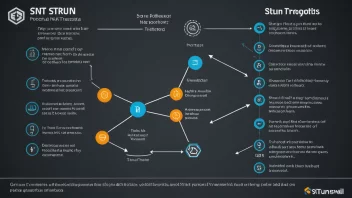
Network Address Translation (NAT) is a technology that allows multiple devices on a local network to share a single public IP address. In online gaming, NAT can pose challenges for peer-to-peer connections, as it can hinder direct communication between players. However, many games implement NAT traversal techniques to facilitate connections, ensuring that players can join matches without disruption. Understanding NAT and its implications is vital for both game developers and players.
In summary, network protocols are fundamental to the functionality and performance of online gaming. From the reliable communication provided by TCP/IP to the speed of UDP, these protocols shape the gaming experience. The use of WebSockets enhances real-time interactions, while HTTP/HTTPS protocols ensure secure data transmission. Additionally, understanding NAT can help resolve connection issues. As online gaming continues to evolve, the importance of robust network protocols will only increase, making them an essential topic for developers and players alike.