Ad hoc networks are dynamic and self-organizing networks that allow devices to communicate with each other without a centralized infrastructure. One of the critical protocols used in these networks is the Dynamic Source Routing (DSR) protocol. Below, we explore frequently asked questions about DSR and its significance in ad hoc networking.
What is DSR?
Dynamic Source Routing (DSR) is a routing protocol designed specifically for use in ad hoc networks. It allows nodes to discover routes to other nodes in the network and maintain those routes as network topology changes.
How does DSR work?
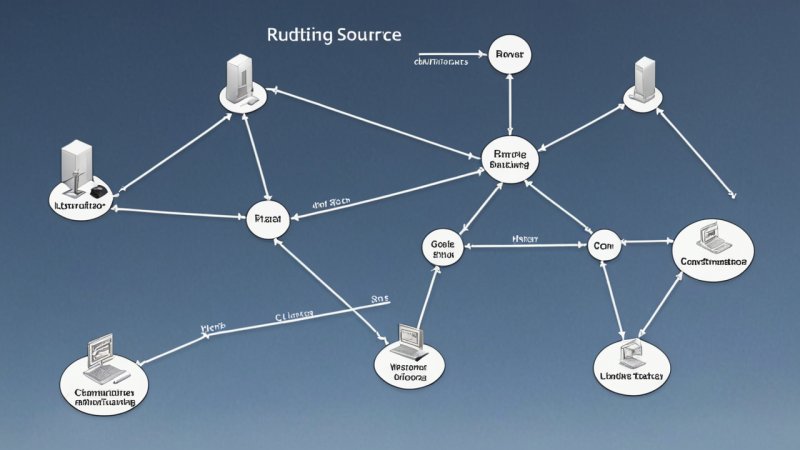
DSR uses a source routing approach where the complete route is determined before packet transmission. Each packet contains the full path information, allowing nodes to forward packets without needing to maintain a complete routing table.
What are the main components of DSR?
- Route Discovery: This process initiates when a source node wants to send data to a destination node without a known route. It broadcasts a route request (RREQ) packet.
- Route Maintenance: Once a route is established, DSR maintains it by sending route error (RERR) packets when a link breaks.
- Data Transmission: The source node sends data packets along the discovered route until the destination is reached.
What are the advantages of using DSR in ad hoc networks?
- Self-Organization: DSR allows nodes to dynamically adapt to changes in the network, making it suitable for mobile environments.
- No Need for a Centralized Infrastructure: Unlike traditional networks, DSR can operate independently of any centralized control.
- Efficient Route Discovery: The use of route caching enables quicker route discovery for frequently accessed nodes.
What are the limitations of DSR?
- Scalability: As the number of nodes increases, the overhead of route discovery and maintenance can lead to performance degradation.
- Increased Overhead: Each data packet contains the complete route, which can lead to larger packet sizes, consuming more bandwidth.
- Route Caching Issues: Stale routes may be cached, leading to inefficient routing decisions.
How does DSR compare to other ad hoc routing protocols?
DSR differs from protocols like AODV (Ad hoc On-Demand Distance Vector) and OLSR (Optimized Link State Routing) primarily in its routing mechanism. While AODV uses destination-sequenced distance vectors and OLSR employs a proactive approach, DSR's source routing provides flexibility but at the cost of increased overhead in larger networks.
In what scenarios is DSR most effective?
DSR is most effective in scenarios where:
- The network topology changes frequently, such as in mobile ad hoc networks.
- There are fewer nodes, which helps minimize overhead.
- High mobility among nodes is present, necessitating quick route re-establishment.
What are some practical applications of DSR?
DSR is utilized in various applications, including:
- Military Communications: For mobile units requiring real-time communication.
- Disaster Recovery: To quickly establish communication networks in disaster-struck areas.
- Sensor Networks: For transmitting data from distributed sensors without fixed infrastructure.
How can I implement DSR in my project?
To implement DSR, you can use network simulation tools like NS-2 or NS-3, which offer built-in support for DSR. You would need to set up the simulation environment, configure the nodes, and define the mobility model to observe DSR's performance in various scenarios.
In summary, DSR plays a vital role in the functioning of ad hoc networks by enabling dynamic and efficient routing. Understanding its features, advantages, and limitations can help in designing better networks that can adapt to changing environments.